Fire
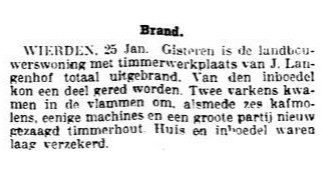
On Thursday 24 January 1924 there was a fatal fire.
Jan Langenhof from Enterbroek learned the craft of wagon maker at coachbuilder Zellers in Kampen and at the wagon workshops of Van den Barg in Deldeneresch, Schreurs in Rijssen and Bloemendal in Markelo.
When he wanted to set up as an independent wagon maker, he had first set his eye on a property at the start of the Rijssensestraat. He saw good opportunities here, because then he would have the Smederij Nieuwenhuis blacksmith's shop next door.
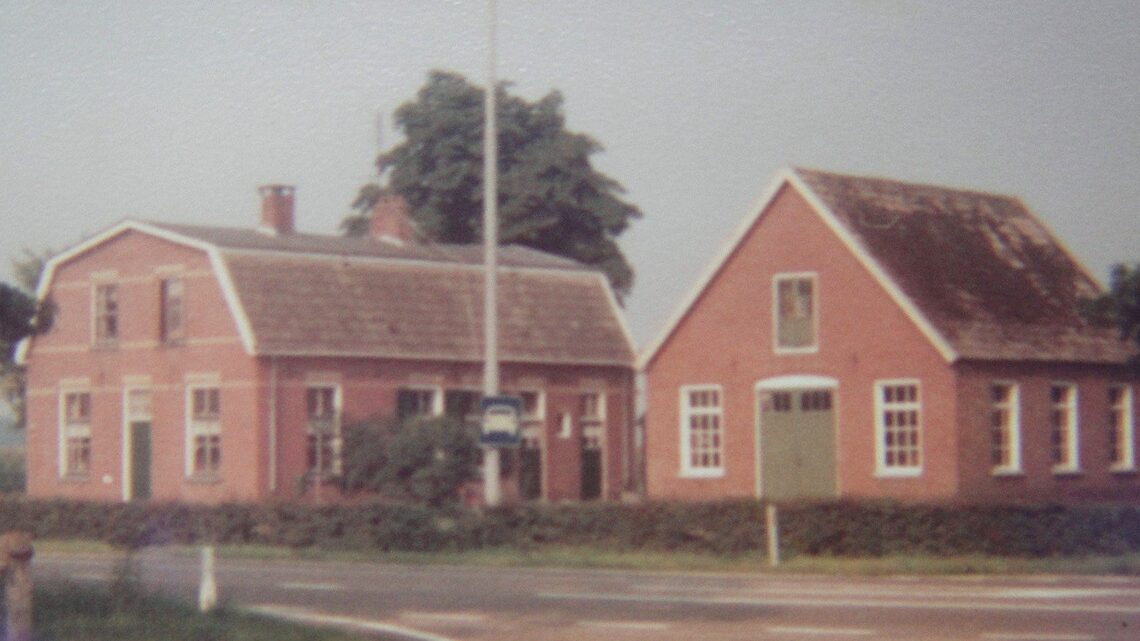
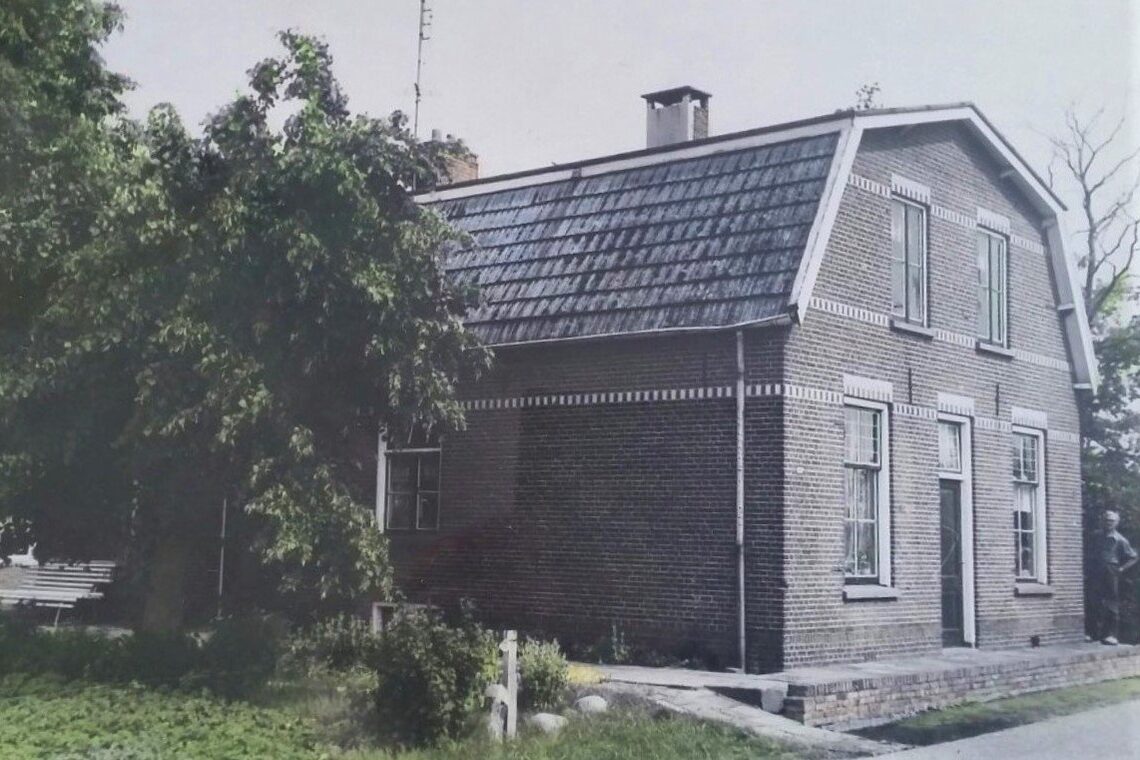
In the end it became two kilometers further on, Rijssensestraat 128. When he married Willemina Morsink from Enterbroek on 3 May 1917, he bought a house with a small shop for 3600 guilders from Jannes Eshuis. As a starting entrepreneur, he started his wagon workshop here. Possibly the closure of Wagenmakerij Jannink on the Hexelseweg was the reason Langenhof settled in Wierden.
On Thursday 24 January 1924 there was a fatal fire.
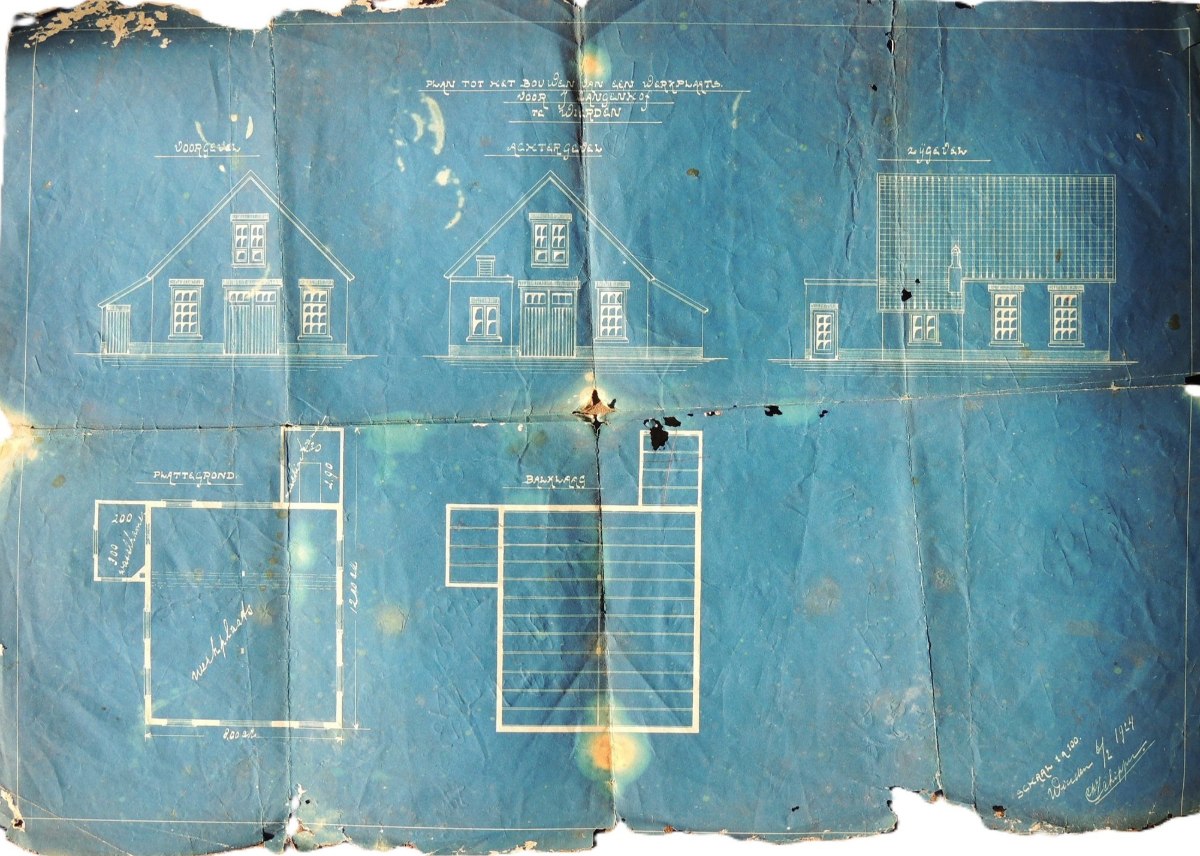
Two weeks after the fire, the Wierden contractor Schipper already had the blueprint design for the new workshop to be built. The work had to be tackled urgently, as soon as the building permit was in. One month later the workshop had to be ready for use. By 1 June 1924 at the latest it had to be delivered complete. If not, a fine of 10 guilders would follow for each day late. The bricks salvaged from the burnt-out house were used to build the new workshop.
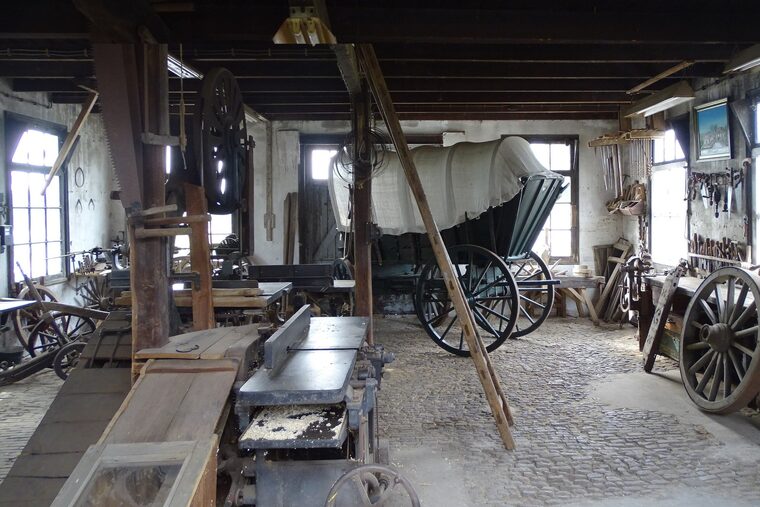
Langenhof bought oak and beech in the area and felled the trees himself. The wood chips flew around as a result. Those were for the farmers. With a wooden winch, the trees were placed on a timber wagon for transport to the wheelwright's workshop. The roots were taken along as firewood.
The tree trunks lay for two years next to the workshop before they could be sawn. Sometimes they were also taken to the pond of neighbour Vunderink. This was to prevent the wood from drying out and cracking. When Langenhof needed the wood, the trunks were pulled out of the water and sawn into planks at Schuitemaker's sawmill in Rijssen.
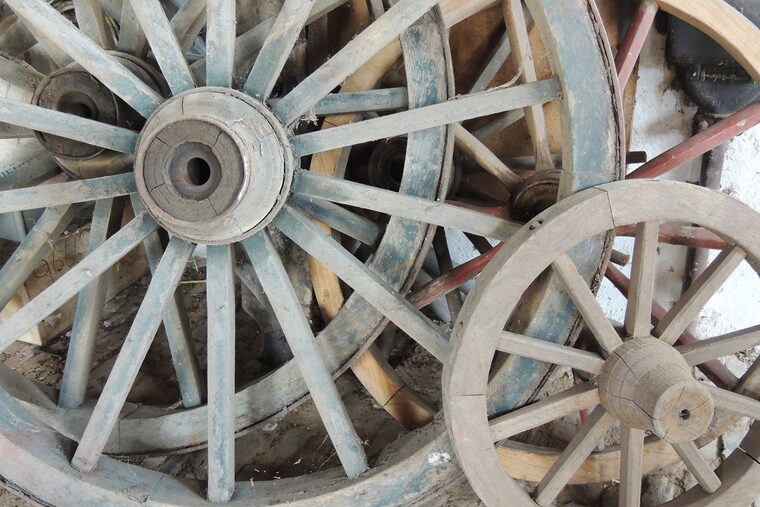
For the hub, the wheelwright uses oak, ash, elm or acacia. The hub is turned from a single piece of rough round wood on a lathe.
The spokes are sawn from oak, ash or acacia.
The best wood for the rims comes from elm. One rim section is made per two spokes.
The load the wheels must bear determines shape, size and thickness. But the number of spokes also depends on the load the wheels have to withstand. In Twente, both the front and rear wheels of farm wagons usually had twelve spokes. These were generally made of oak.
The wagons often of elm wood.
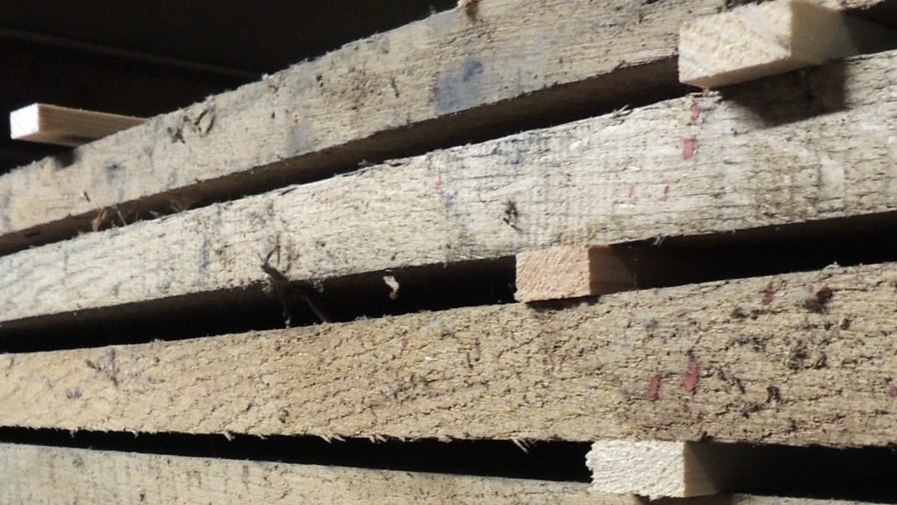
Afterwards the planks were brought to the workshop on the wagon, where they were laid on small spacer battens in the hollow or outdoors to dry. There the wood was then dried by the wind.
Every village had a wagon workshop, because the wagon maker was an essential man in the community. Yet he was greatly undervalued. Hardly any wagon makers achieved any prosperity. The amounts he dared to charge were very low. Moreover, the price was often haggled over firmly. Customers often paid months after delivery. So Langenhof regularly sent his eldest daughter round to collect the money.
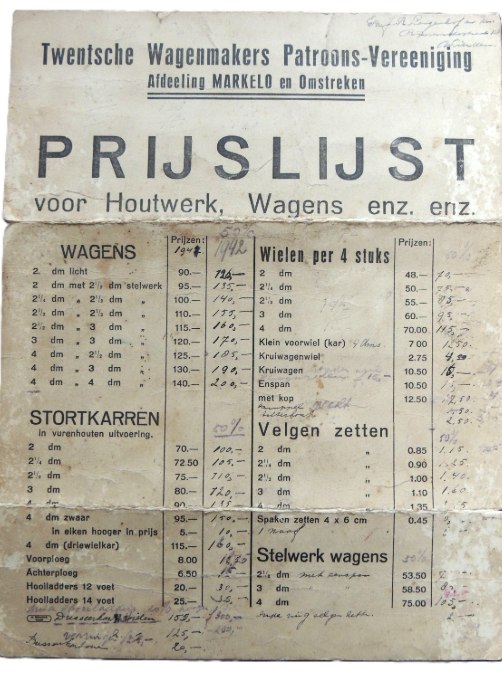
Clients began asking for prices from wagon makers in the area. And however busy the wagon maker was, he often still tried to win the order by quoting an even lower price than his competitors. The Twentsche Wagenmakers Patroons Vereeniging department Markelo en Omstreken, of which Langenhof was also a member, put an end to this ruinous competition and had the member wagon makers calculate reasonable prices.
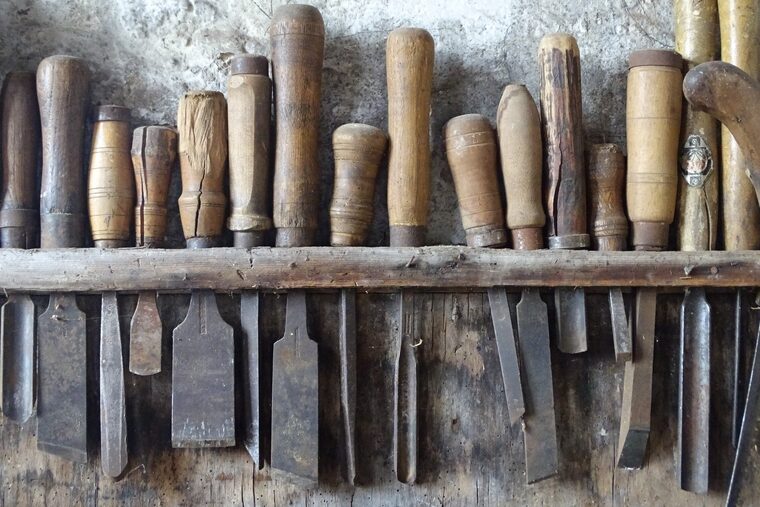
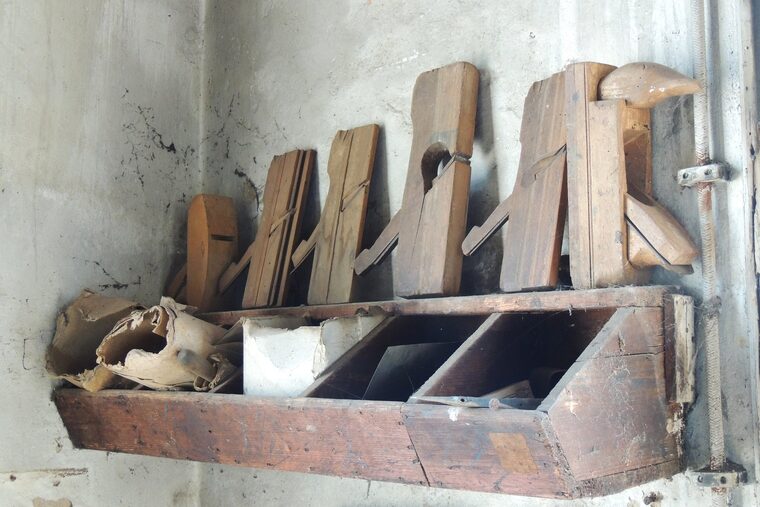
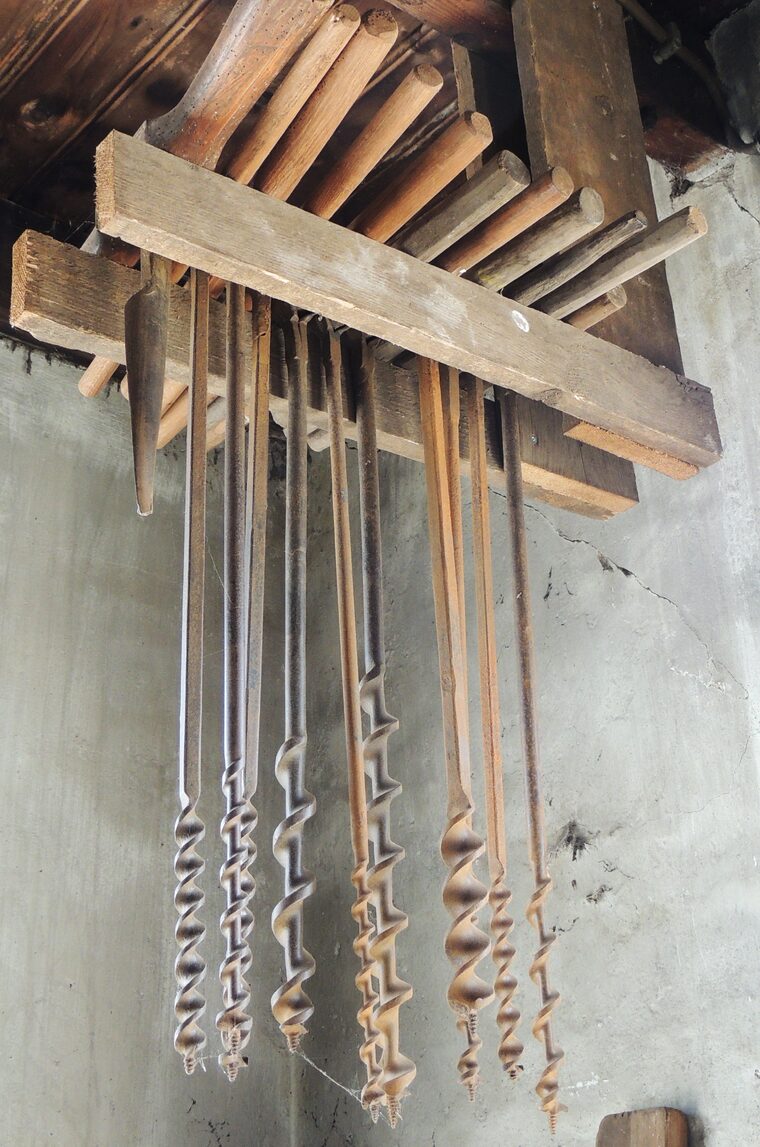
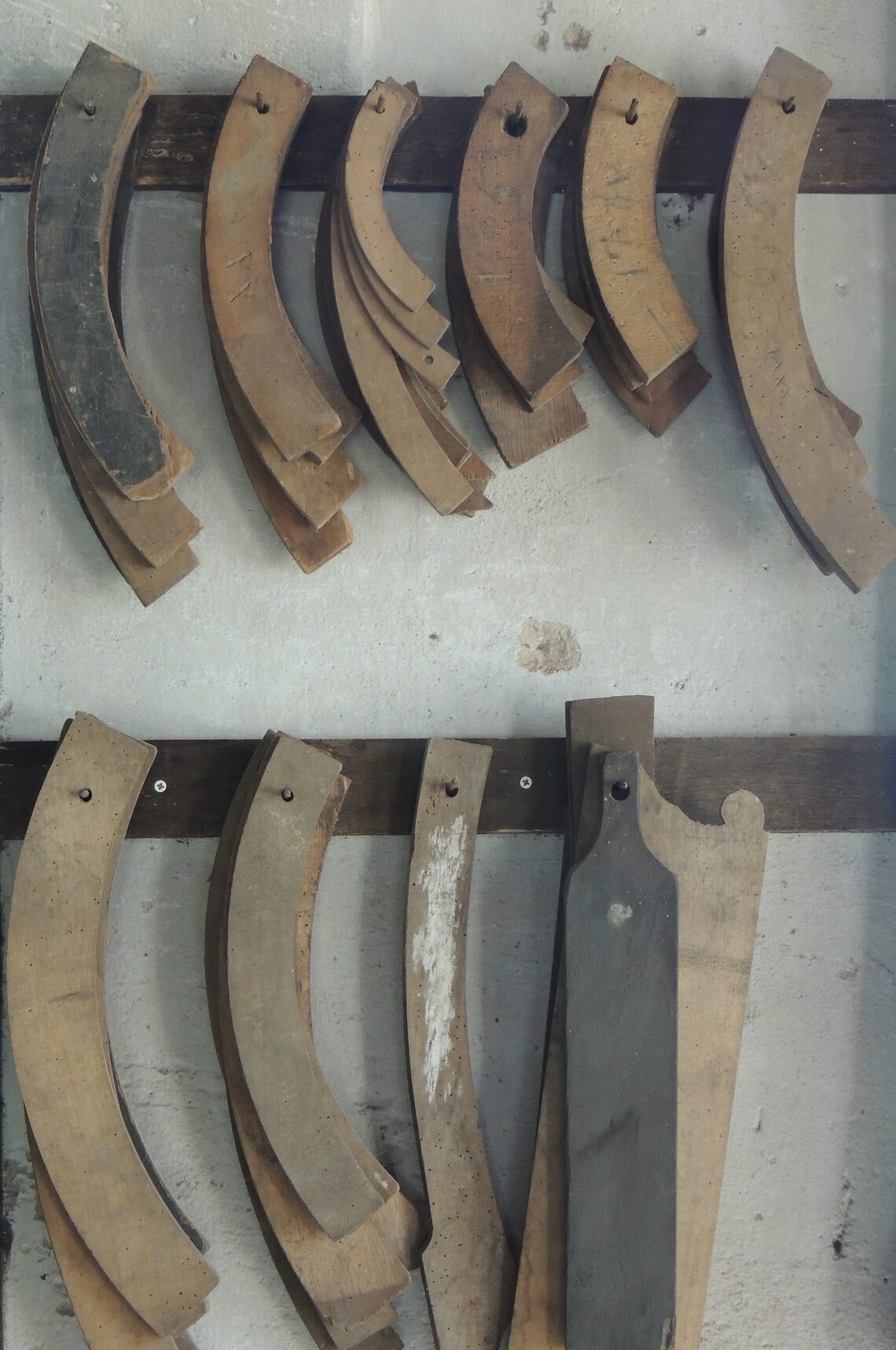
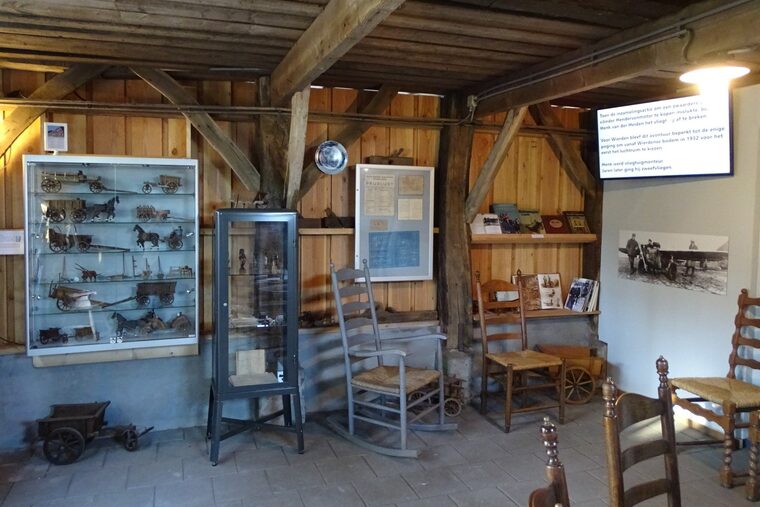
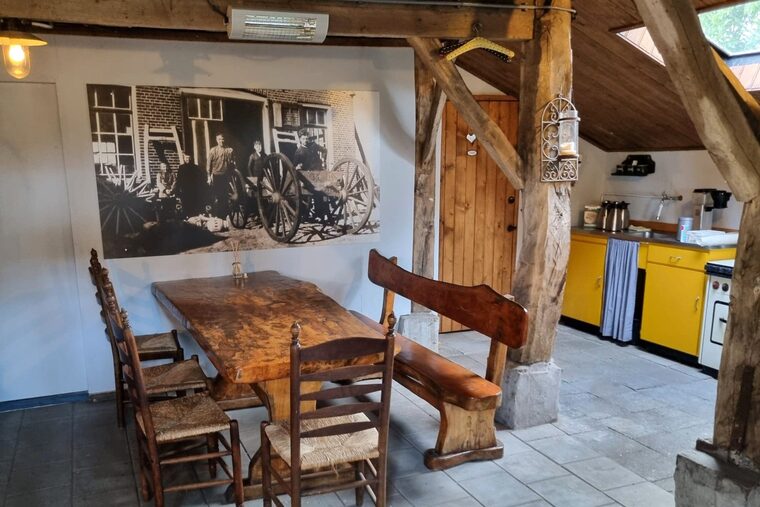
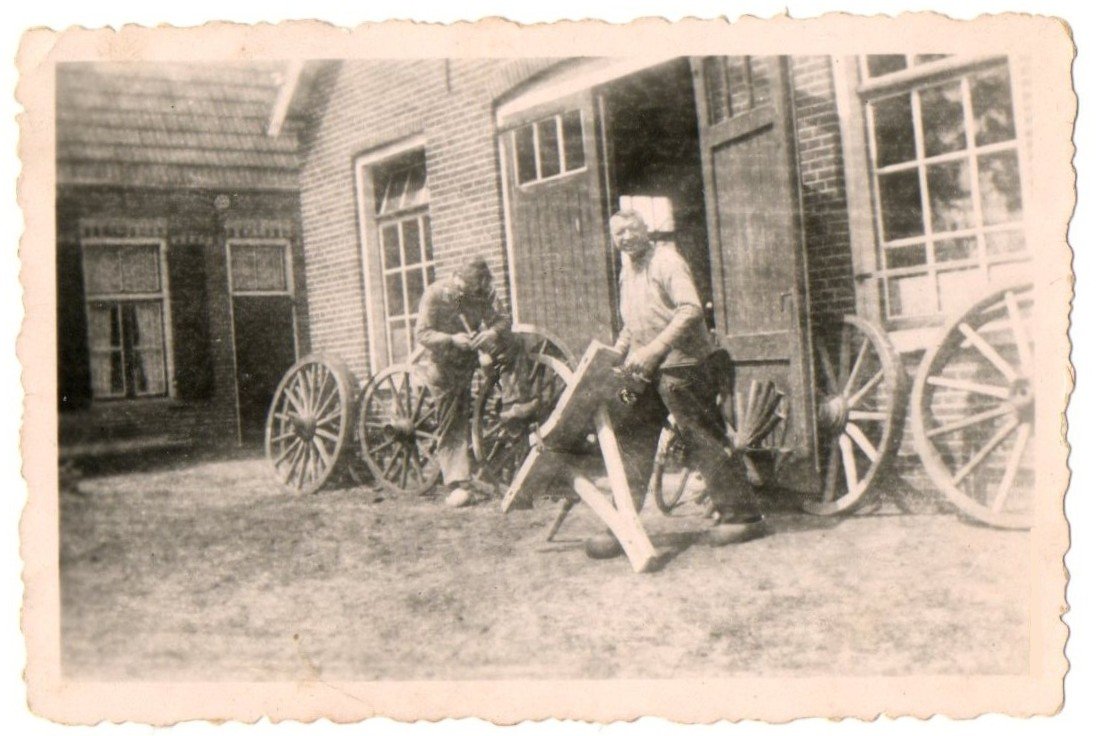
Together with various workers and his sons, Langenhof made many farm wagons, dump carts, wheelbarrows, ploughs, harrows, but also, for example, a baker's cart for baker Morsink and a small cart for the grandchildren until 1960.
Langenhof was permitted, with a licence, to let a dog run for his dog cart. In this way the (small) wheels were taken to blacksmith Nieuwenhuis, who then fitted them with iron hoops.
When working the wood, of course many wood shavings were released. The butchers from the village came to collect these shavings for smoking their meat.
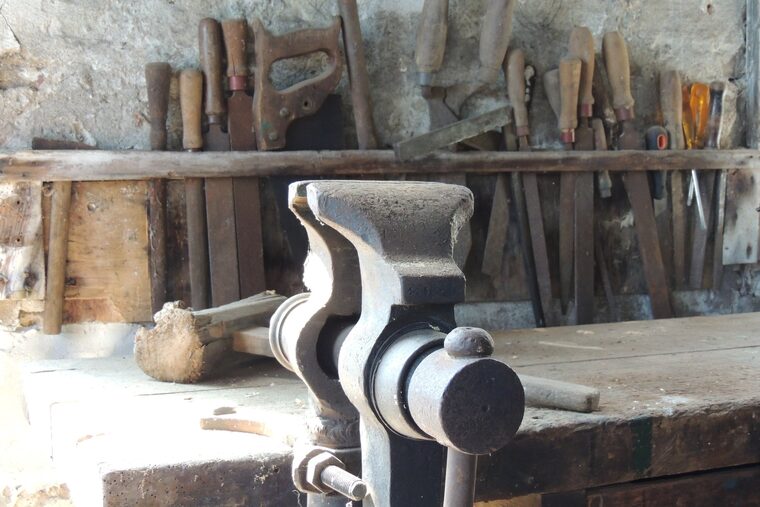
Besides the traditional handcraft, machines were used, such as the lathe, the band saw and the thicknessing planer. These machines were driven by multiple belts by a Deutz stationary engine in the engine shed behind the workshop.
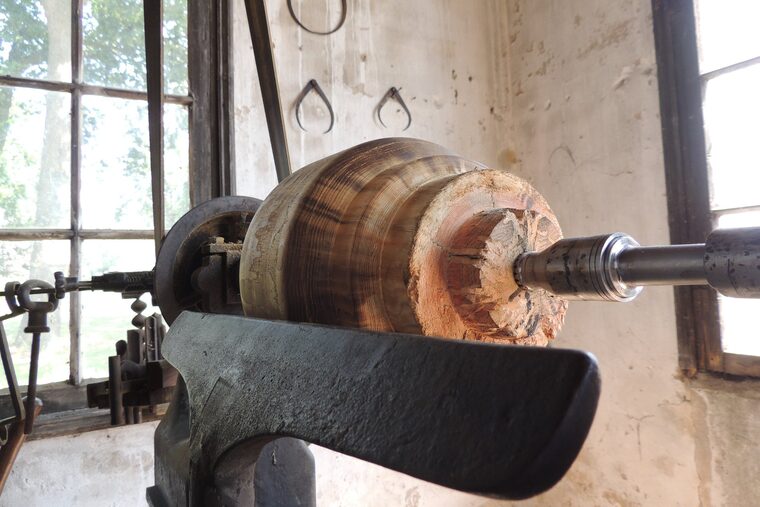
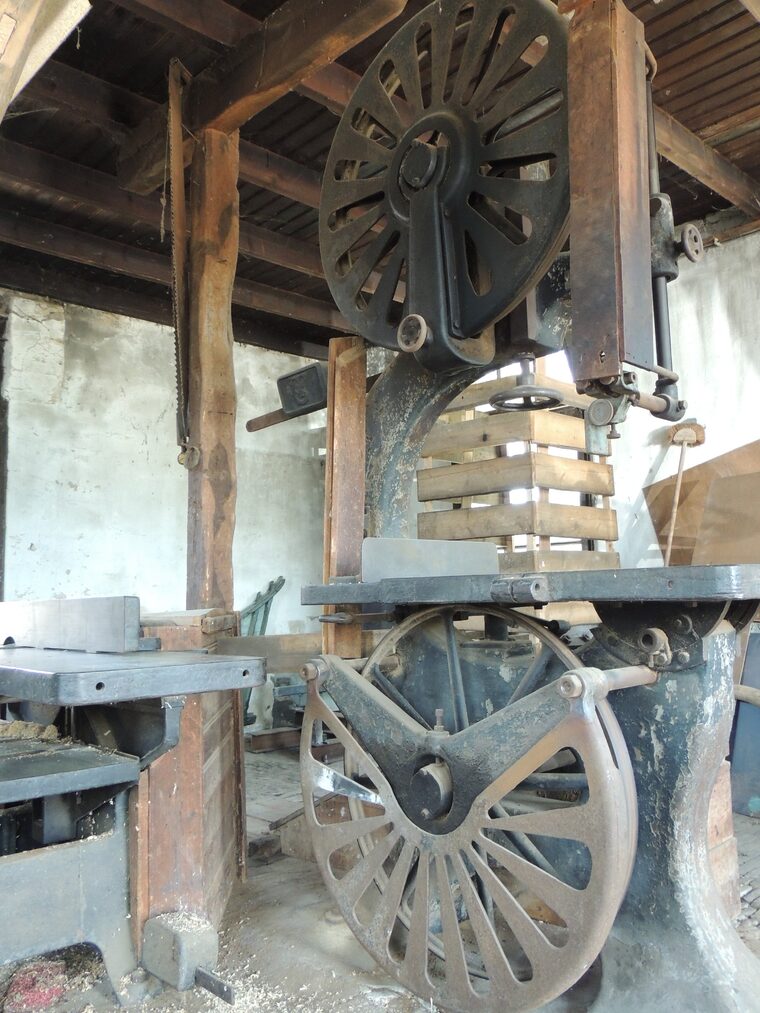
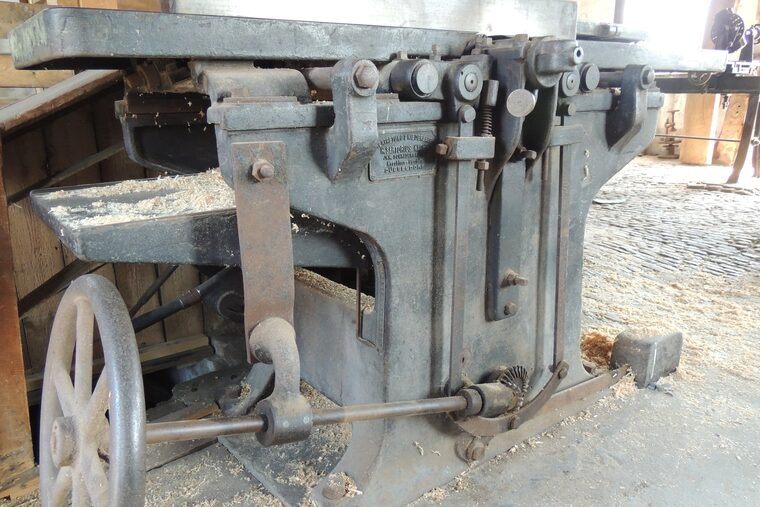
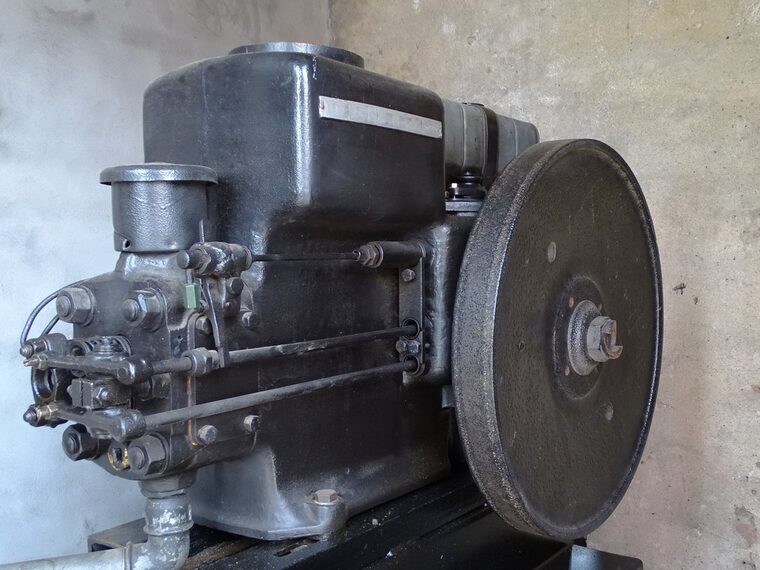
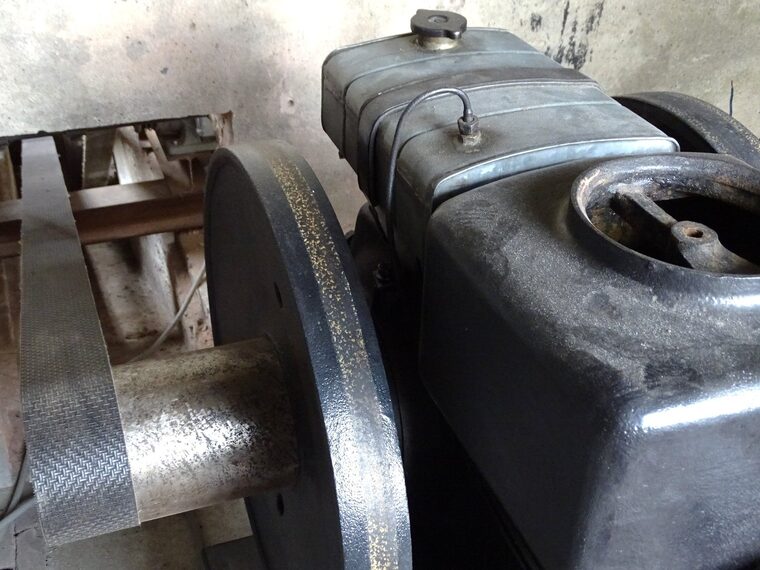
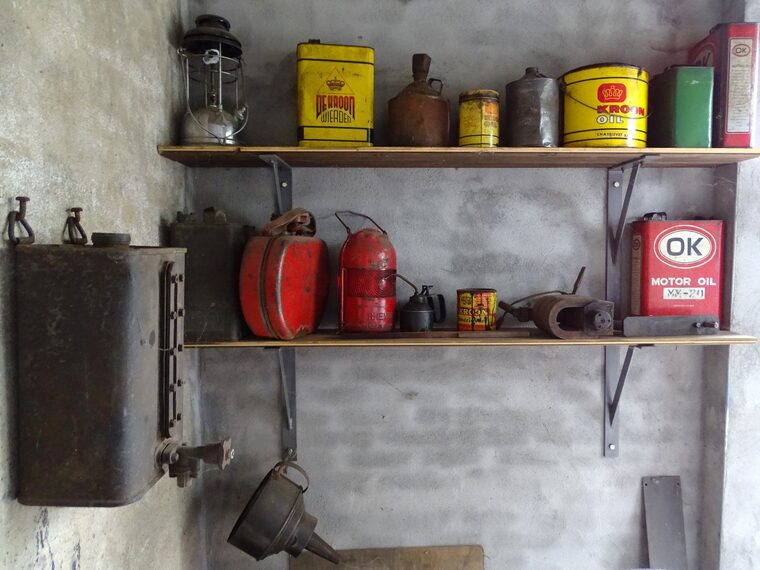
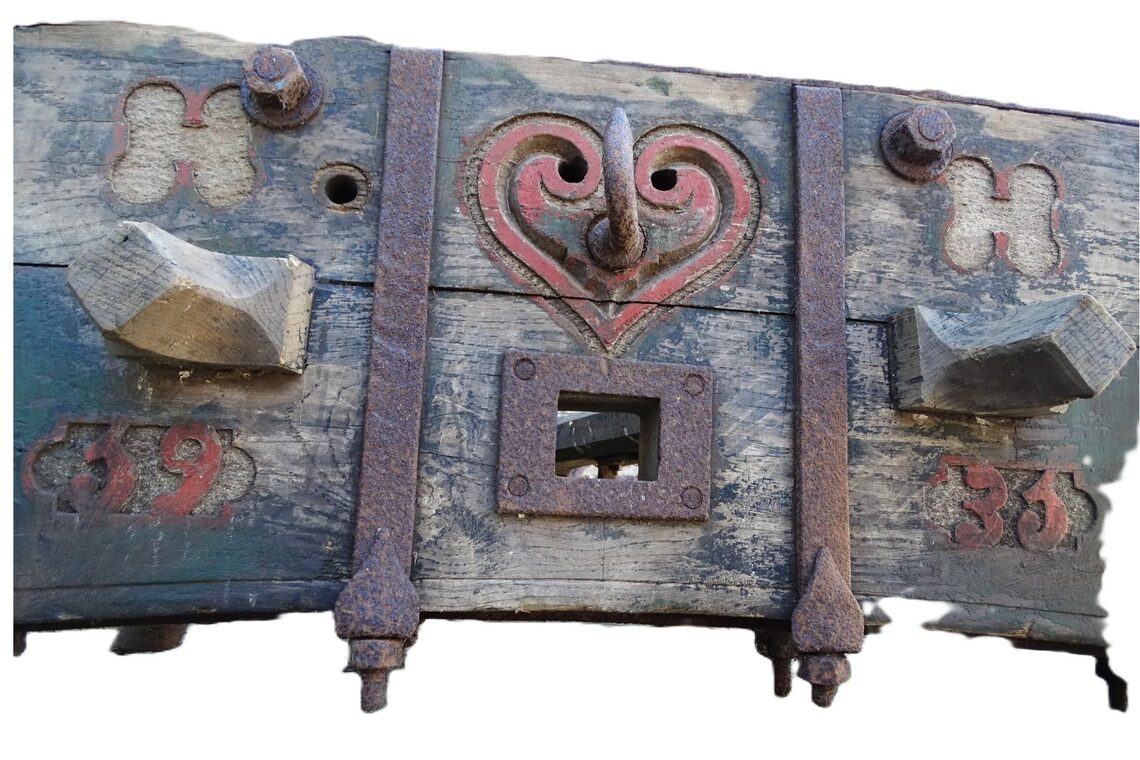
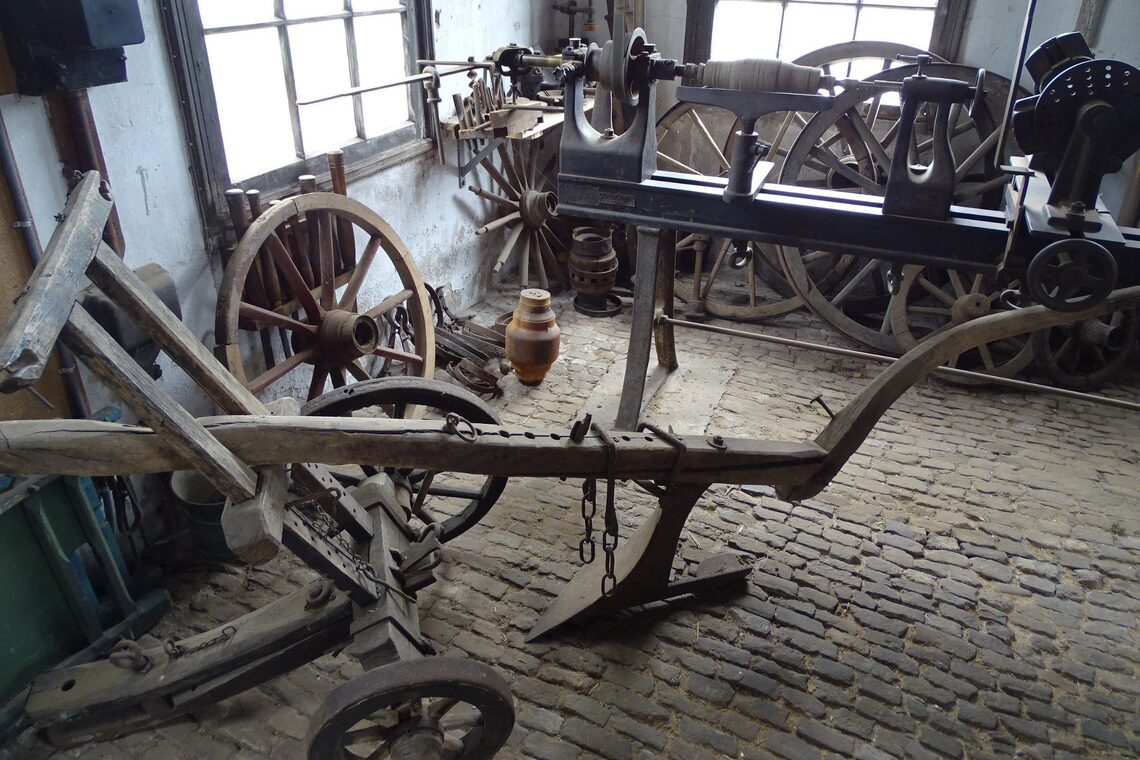
Because of the possibly deafening noise of the machines in the workshop, work was also done outside.
After 1945 wagons with rubber tyres came onto the market, and from the early 1960s farmers used more tractors than horses. Wagons with rubber tyres were therefore needed too. It was the death blow for all traditional wagon makers. Moreover, more and more sand roads were paved with clinkers and asphalt. The iron hoops around the wooden wheels made a lot of noise on these roads, but even worse, they wore out much faster than on sand. The demand for wooden wagons with heavy wooden wheels therefore fell sharply. Work continued in this workshop until the late 1950s, but the orders became considerably fewer.
Langenhof stuck to the old craft of wagon maker and did not make the switch to bodywork builder, as Van den Barg in Deldeneresch did. Very close by, Landbouwhuis Timmerman had meanwhile also begun making modern wagons.
When Langenhof died in 1963 and his son Freek had meanwhile found better-paid work at Oonk Klokkenfabriek, also on the Rijssensestraat, the doors of the wagon workshop were closed.
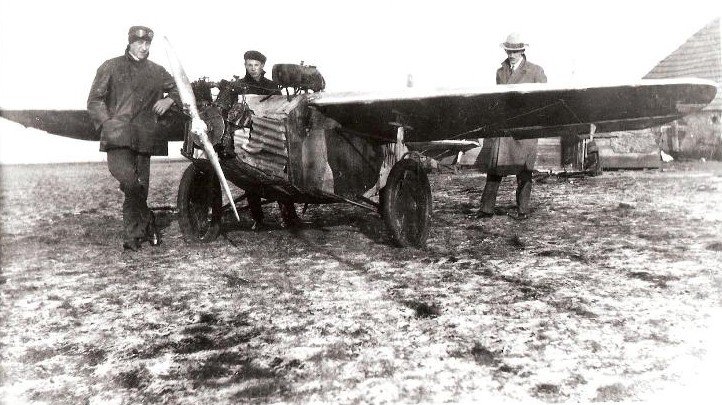
The cousins Henk van der Heiden (l) and Gerrit 't Lam (m) from Almelo built an airplane in our workshop in 1932. Gerrit was an employee of Langenhof.
The official opening of Luchtvaartterrein Twenthe in 1931 drew tens of thousands of visitors to Lonneker. Even more visitors came a year later for the official launch of the Schiphol - Twente air route and the arrival of the Graf Zeppelin.
All of Twente became enthusiastic about flying.
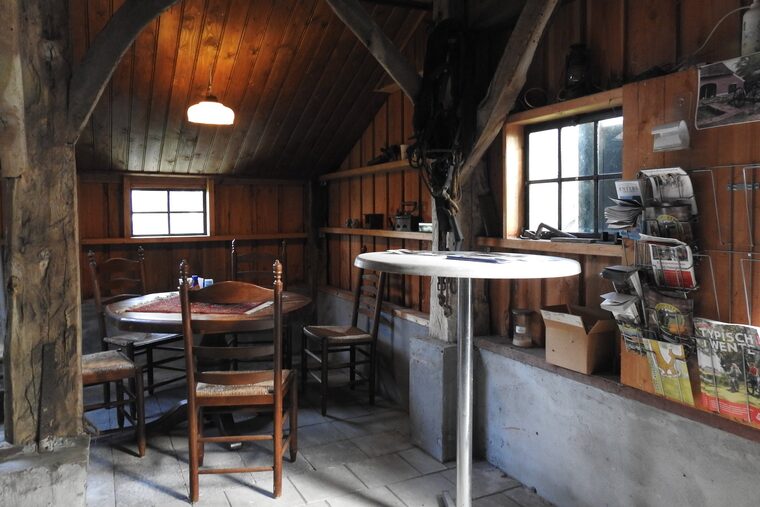
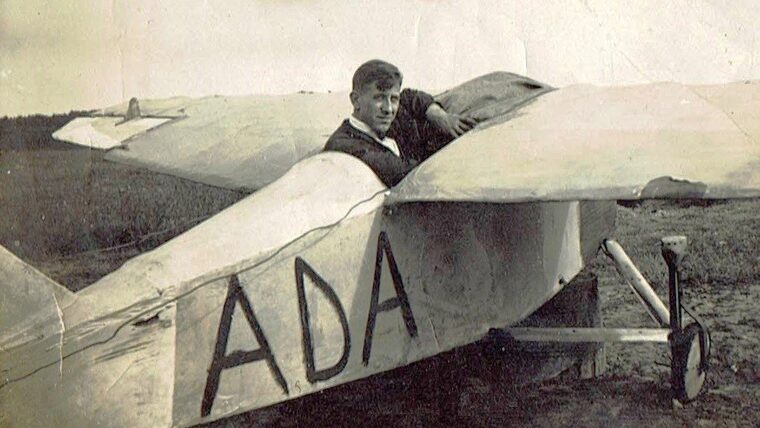
The 19-year-old Henk van der Heiden also wanted to fly, but he had no money for it. So he decided to build an airplane himself. He asked his cousin Gerrit het Lam to help him. In the attic above the workshop, the two of them could make the fuselage and the wings. The propeller was made of ash wood.
Farmer Vlogtman transported the parts to his farm on Schietbaanweg near the Wierdense Veld by horse and cart. There the airplane was assembled in a 'hangar'. The engine and wheels were borrowed from the Eerste Almelosche Auto- en Motorenslooperij H. Borrink in Almelo.
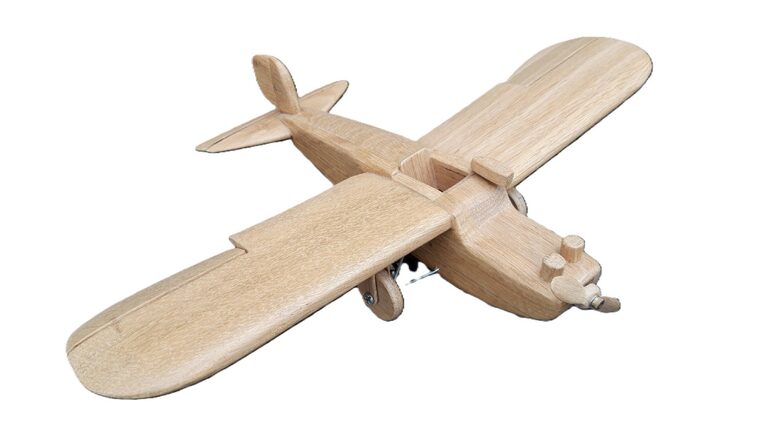
The airplane had a wingspan of 7.50 meters and a length of 6 meters. The engine was placed in front of the cockpit. On top sat the 10-liter fuel tank. The fuel flowed directly to the engine below. Flying upside down was certainly not Henk's plan. The landing gear consisted of two wheels from a motorcycle. The tail wheel was a piece of skid steel. The flaps for climbing and descending on the wings were connected by wiring to pedals in the cockpit. There was only room for Henk on a simple plywood seat. He could operate the instruments with his hands and feet.
Under the watchful eyes of family and acquaintances, the first test flight was not a success. The airplane only rolled around on propeller power. With a lot of roaring, it occasionally made a little hop of a few centimeters.
A stronger engine, such as a 4-cylinder Henderson engine, would surely get the 350 kg aircraft off the ground. Good friend Geert Alink therefore started a kind of crowdfunding campaign. For a dime, people could come see the airplane at Vlogtman's.
Regional poet Johanna F. van Buren supported this initiative and made an appeal in the newspaper: "Lui met centen mee duch, det dissen jongen weerd is dej um nen poswisseltien stuurt, det um de weg noa de veercilindermotor neet al te lank wödt".
She also wrote a poem that was published in January 1933 in Het Twentsch Zondagsblad.
Johanna van Buren's appeal and poem, as well as the campaign to come see the airplane, brought in almost nothing. The airplane was eventually broken up. That is, the engine and wheels went back to Borrink in Almelo.
The fuselage stayed standing for a long time. The 'hangar' with the airplane became the domain of roaming chickens.
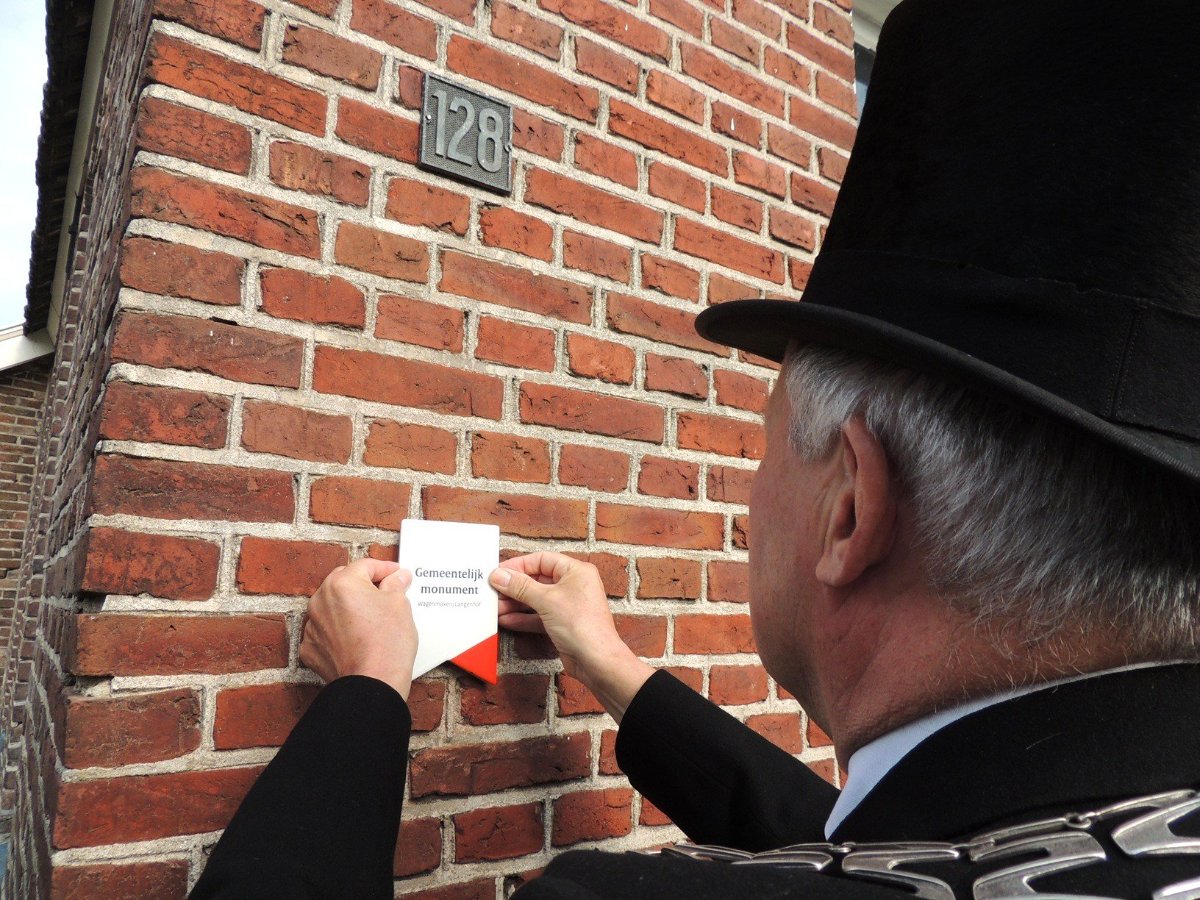
After some renovation work, mayor Henk Robben attached the municipal monument plaque to the facade, and so on Open Monument Day 2015 the doors of our wheelwright's workshop opened to the public.
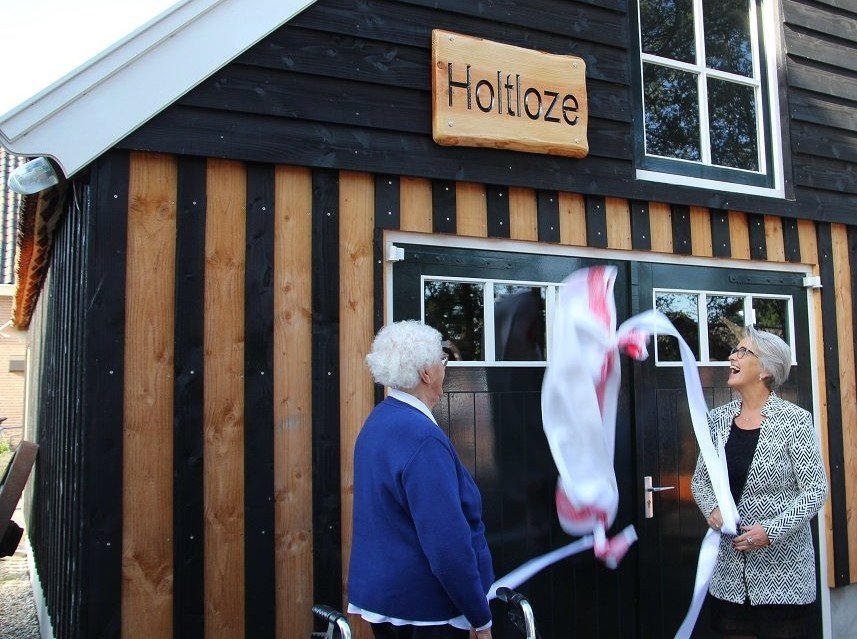
During Open Monument Day 2019, mayor Doret Tigchelaar (r) and Mrs. Dinie Langenhof (l) opened our reception and exhibition space 'Holtloze'.